

Hemophilia Therapeutics Market to Reach US$22.9 Billion by 2033 at 5.1% CAGR | Persistence Market Research
Hemophilia Therapeutics Market
BRENFORD, LONDON, UNITED KINGDOM, July 22, 2026 /EINPresswire.com/ -- The hemophilia therapeutics market continues to evolve as healthcare providers focus on improving disease management, reducing bleeding episodes, and enhancing long-term patient outcomes. Advances in recombinant therapies, extended half-life clotting factors, gene-based innovations, and personalized treatment approaches are reshaping clinical practices. Growing awareness, better diagnostic capabilities, and expanding access to specialized care are also supporting market expansion. Pharmaceutical companies continue investing in research to develop safer and more effective treatment options for individuals living with hemophilia across different age groups.
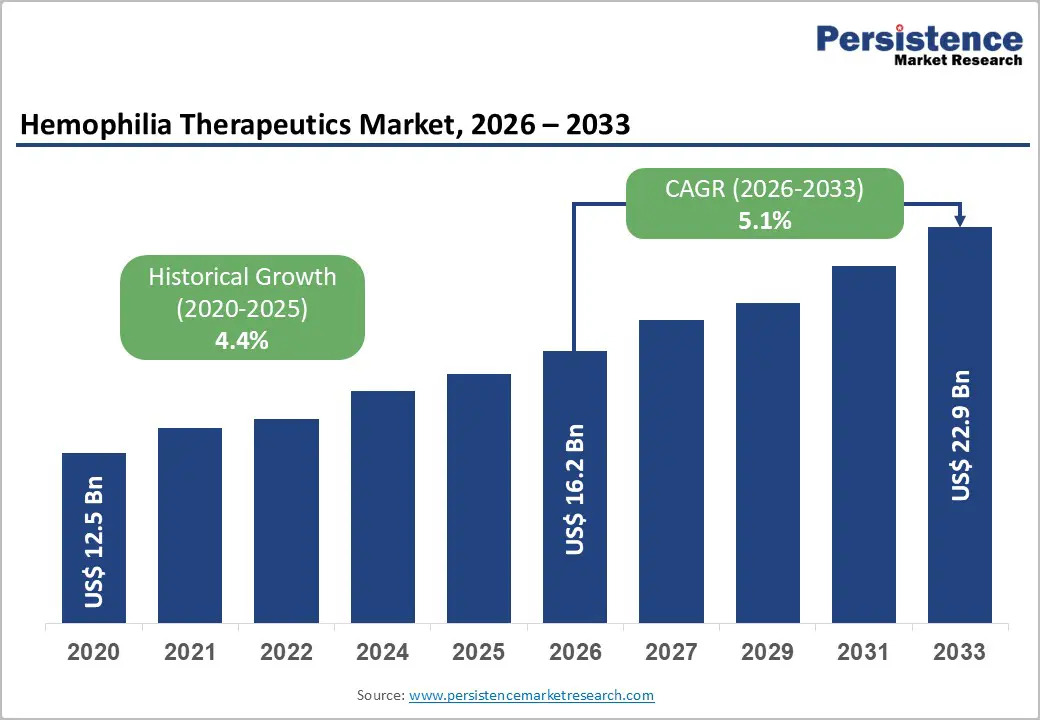
The global hemophilia therapeutics market size is likely to be valued at US$16.2 billion in 2026 and is projected to reach US$22.9 billion by 2033, growing at a CAGR of 5.1% during the forecast period from 2026 to 2033. Rising healthcare expenditure, favorable reimbursement policies in developed countries, and increasing adoption of preventive treatment strategies continue to support market growth. Recombinant clotting factor therapies remain the leading product segment due to their proven safety and efficacy, while North America leads the market because of advanced healthcare infrastructure, high treatment accessibility, and continuous product innovation.
Want Market Insights? Get Your Free Report Sample : https://www.persistencemarketresearch.com/samples/4727
Key Highlights from the Report
➤ The global hemophilia therapeutics market is expected to grow from US$16.2 billion in 2026 to US$22.9 billion by 2033, registering a CAGR of 5.1%.
➤ Growing adoption of recombinant clotting factor therapies continues to strengthen treatment outcomes and improve patient safety.
➤ Increasing investment in advanced biologics and gene-based treatment research is expanding future therapeutic possibilities.
➤ Preventive treatment strategies are gaining wider acceptance as they help reduce bleeding complications and hospital admissions.
➤ Expanding awareness programs and improved diagnosis are supporting earlier intervention and better disease management.
➤ Strong healthcare infrastructure and reimbursement support continue to accelerate market growth across developed economies.
Market Segmentation
The hemophilia therapeutics market can be segmented by product type, therapy, disease type, and distribution channel. Recombinant clotting factor concentrates dominate the market because they offer high purity, lower infection risk, and consistent clinical performance. Plasma-derived therapies continue serving patients where appropriate, while non-factor replacement therapies are gaining attention for their convenient dosing schedules and improved patient compliance. Gene therapy research is also creating new opportunities for long-term disease management.
From an end-user perspective, hospitals remain the largest segment owing to comprehensive treatment facilities and access to specialized hematology professionals. Specialty clinics also contribute significantly by offering personalized care and long-term patient monitoring. Retail and hospital pharmacies continue to play important roles in ensuring consistent therapy availability. Growing home-based treatment adoption further supports convenience, adherence, and quality of life for patients requiring lifelong therapy.
Regional Insights
North America continues to lead the hemophilia therapeutics market due to advanced healthcare infrastructure, widespread awareness, favorable reimbursement policies, and strong investment in innovative treatment development. High diagnosis rates, established treatment centers, and continuous clinical research further strengthen regional leadership. The presence of leading pharmaceutical companies also supports rapid commercialization of advanced therapies.
Europe remains another significant regional market supported by comprehensive healthcare systems, strong regulatory frameworks, and increasing adoption of innovative biologic therapies. Meanwhile, Asia Pacific is witnessing steady expansion due to improving healthcare access, growing awareness initiatives, expanding diagnostic capabilities, and increasing investments in rare disease treatment programs across developing economies.
Customize This Report for Your Exact Requirements : https://www.persistencemarketresearch.com/request-customization/4727
Market Drivers
Growing awareness regarding inherited bleeding disorders is encouraging earlier diagnosis and timely treatment. Healthcare providers increasingly recommend preventive therapy to minimize bleeding episodes and improve patient quality of life. Continuous technological advancements in recombinant products, extended half-life therapies, and novel treatment platforms further strengthen market growth. Supportive government initiatives and expanding patient assistance programs continue improving treatment accessibility worldwide.
Market Restraints
Despite promising growth, treatment costs remain a significant challenge, particularly in developing regions where healthcare resources are limited. Delayed diagnosis, inadequate specialist availability, and unequal reimbursement coverage continue restricting therapy access. Regulatory complexities associated with advanced biologics and gene-based therapies may also lengthen product approval timelines and increase development expenses for manufacturers.
Unlock Complete Insights – Buy the Full Report : https://www.persistencemarketresearch.com/checkout/4727
Market Opportunities
Future opportunities are emerging from continued innovation in gene therapy, personalized medicine, and next-generation biologics. Expanding healthcare infrastructure in emerging economies, increasing investments in rare disease research, and greater collaboration between biotechnology firms and healthcare providers are expected to create substantial growth prospects. Digital patient monitoring and improved treatment adherence programs will further enhance long-term disease management.
Company Insights
Key players operating in the hemophilia therapeutics market include Novo Nordisk A/S, F. Hoffmann-La Roche Ltd., Pfizer Inc., Sanofi, CSL Behring, Takeda Pharmaceutical Company Limited, Bayer AG, Octapharma AG, BioMarin Pharmaceutical Inc., Grifols S.A., Kedrion Biopharma, and Swedish Orphan Biovitrum AB (Sobi).
Explore the Latest Trending Research Reports:
Panic Disorders Market
Metabolomics Biomarker Market
Persistence Market Research
Persistence Market Research Pvt Ltd
+1 646-878-6329
email us here
Visit us on social media:
LinkedIn
Instagram
Facebook
YouTube
X
Legal Disclaimer:
EIN Presswire provides this news content "as is" without warranty of any kind. We do not accept any responsibility or liability for the accuracy, content, images, videos, licenses, completeness, legality, or reliability of the information contained in this article. If you have any complaints or copyright issues related to this article, kindly contact the author above.
